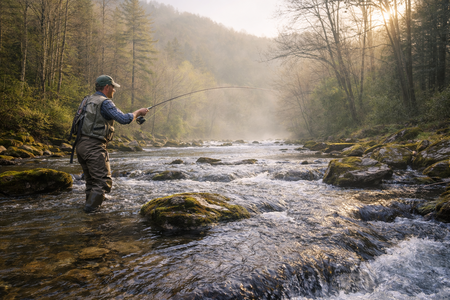
Do You Need Studded Wading Boots? A Guide to Traction Options
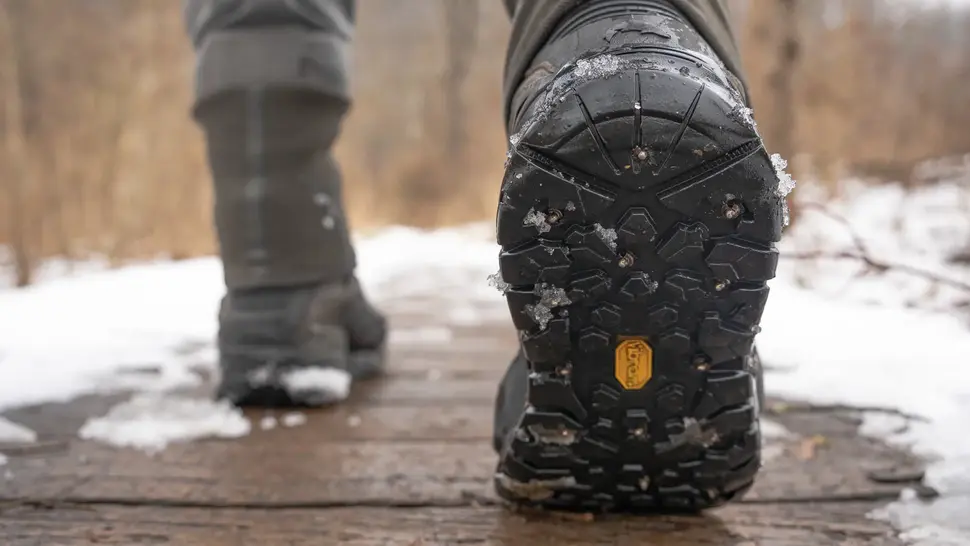
Standing thigh-deep in fast current on moss-covered boulders, you face a critical question: will your boots hold, or will you take an unexpected swim? For many anglers, adding studs to wading boots transforms treacherous wading into confident fishing. But studded boots aren't the right choice for every situation—and they come with significant tradeoffs that you need to understand before drilling holes in your expensive footwear.
This comprehensive guide will help you determine whether studded wading boots are right for your fishing style, explore the different traction enhancement options available, and understand when to skip the studs entirely.
Understanding Traction Enhancement for Wading Boots

Wading boot traction exists on a spectrum. At one end, you have standard rubber or felt soles that rely solely on the material properties and tread patterns to provide grip. At the other end, you have aggressive traction systems featuring metal studs, aluminum bars, or carbide spikes that physically bite into rocks, mud, and ice.
The decision to enhance your boot traction isn't just about grip—it's about matching your footwear to the specific demands of the waters you fish most frequently. Let's break down when additional traction makes sense and when it's overkill.
When You Absolutely Need Studded Wading Boots

Certain fishing conditions and environments demand maximum traction. Here's when studded boots transition from "nice to have" to "essential safety equipment":
Fast-Moving Freestone Rivers
If you regularly fish high-gradient freestone rivers with boulder-strewn bottoms and strong currents, studded boots can be lifesaving. The combination of water pressure pushing against your legs, irregular footing on round rocks, and the consequences of falling in fast water makes maximum traction critical.
Rivers like Montana's Madison, Colorado's Arkansas, or Pennsylvania's Youghiogheny feature the kind of challenging wading where studs provide a tangible safety advantage. In these environments, losing your footing doesn't just mean getting wet—it can mean serious injury or worse.
Slime and Algae-Covered Rocks
Some waters develop a biological slick that makes rocks feel like they've been coated in dish soap. This biofilm of algae, diatoms, and other microorganisms creates conditions where even felt soles struggle to find purchase.
Warm water rivers during summer often develop thick algae growth. Spring creeks with constant flows can harbor persistent slime. In these conditions, metal studs cut through the biological layer to contact the bare rock beneath, providing grip that material alone cannot deliver.
Steep Gradient Mountain Streams
Technical mountain streams with steep gradients and large boulders present unique challenges. The combination of elevation changes, irregular footing, and cold water that reduces reaction time makes studs valuable for maintaining stability.
If you're fishing high-elevation waters where a fall could result in tumbling downstream over sharp rocks, the added security of studded boots is worth considering seriously.
Deep Water Wading
Wading depth amplifies every stability issue. When water reaches your chest, even small slips become dangerous. The combination of water pressure, reduced visibility of foot placement, and buoyancy effects makes secure footing essential.
Anglers who regularly wade deep for steelhead, large trout, or saltwater species often consider studs non-negotiable safety equipment.
Winter and Ice Fishing Conditions
Snow and ice on riverbanks or stream edges turn regular wading boots into ice skates. Studs provide crucial traction not just in the water, but also when navigating frozen banks and snow-covered approaches.
If you fish during winter months when ice becomes a factor, carbide studs excel at biting into frozen surfaces that would be nearly impossible to navigate in standard boots.
Guides and Professional Anglers
If you're on the water 50+ days per year, covering miles of river bottom in varied conditions, the safety margin provided by studs becomes increasingly important. Professional guides who need to maintain footing while managing clients, nets, and gear in challenging conditions often view studded boots as essential equipment.
When You DON'T Need Studded Wading Boots

Studs aren't always the answer. In many fishing situations, they're unnecessary—or actually detrimental to your fishing experience:
Drift Boat Fishing
This is the big one. Most drift boat captains and guides have a strict no-studs policy. Metal studs can damage wooden decks, puncture inflatable rafts, and scratch fiberglass finishes. If you primarily fish from boats, studded boots will get you uninvited from future trips.
Even if you do some wading during float trips, the risk of boat damage typically means you'll need non-studded boots for these outings.
Gentle Spring Creeks and Meadow Streams
Low-gradient spring creeks with gravel or sandy bottoms don't require aggressive traction. The combination of slow current, stable footing, and typically shallow water means standard rubber or felt soles provide adequate grip.
In these pastoral settings, studs are overkill—like wearing crampons on a sidewalk.
Extensive Hiking Requirements
Studs perform poorly on dry land. They're noisy, can be slippery on certain surfaces (like wet wood or ice in some conditions), and accelerate fatigue during long hikes. The clicking sound of metal on rock is also unwelcome if you're trying to approach waters quietly.
If reaching your fishing spot requires hiking several miles on trails, studs will make the journey significantly more uncomfortable.
Warm Water Bass and Panfish Fishing
If you're fishing farm ponds, warm water lakes, or gentle rivers for bass and panfish, you typically don't need aggressive traction. These environments rarely present the kind of challenging wading that justifies studs.
Saltwater Flats Fishing
Wading sandy or firm mud flats for bonefish, redfish, or striped bass doesn't require studs. In fact, studs can be problematic on these surfaces, potentially attracting unwanted attention or creating noise that spooks wary fish in shallow, clear water.
Limited Budget Situations
Quality studs, installation tools, and potentially professional installation add $40-100+ to your boot cost. If you're fishing occasionally in moderate conditions, this investment may not be justified. Save the money for flies or a better rod.
Types of Traction Enhancement Systems
If you've determined that additional traction would benefit your fishing, you have several options beyond simple screw-in studs:
Carbide Studs
What They Are: Single-point or star-shaped studs made from tungsten carbide, one of the hardest materials available.
Advantages:
- Exceptional durability—can last 600+ days of hard use
- Excellent grip on rock, especially in fast water
- Work well on ice and frozen conditions
- Relatively lightweight compared to aluminum alternatives
- Long lifespan justifies higher initial cost
Disadvantages:
- More expensive than aluminum ($50-80 for a complete set)
- Slightly less grippy than soft aluminum on certain rock types
- Still damage boats and should not be worn on aircraft
- Can be noisy on rocks, potentially spooking fish
Best For: Serious anglers fishing rocky, fast water regularly who want maximum durability and don't mind the higher upfront cost.
Popular Options: Grip Studs, Simms HardBite Star Cleats, Korkers Carbide Spike Soles
Aluminum Studs and Cleats
What They Are: Soft metal studs that conform to rock surfaces, available in various configurations including star cleats, hex discs, and bars.
Advantages:
- Superior grip on hard rock types (granite, basalt, quartz)
- Softer metal "molds" around rocks for sticky traction
- Generally more affordable than carbide ($30-50 for sets)
- Excellent on extremely slippery surfaces
- Available in multiple configurations
Disadvantages:
- Wear down faster than carbide—may need replacement annually
- Heavier than carbide options
- Not suitable for boats or planes
- Can be problematic on certain surfaces like wet wood
Best For: Anglers fishing extremely slippery conditions who prioritize maximum grip over longevity and don't log excessive mileage.
Popular Options: Simms AlumiBite Star Cleats, Patagonia Traction Stud Kit
Aluminum Bars
What They Are: Wider aluminum bars (rather than point studs) that create contact patches on rocks. Pioneered by Patagonia for their Foot Tractor boots.
Advantages:
- Create a "sticky" grip through material deformation
- Excellent on smooth, rounded boulders where studs can slip
- Superior performance on certain rock types
- Can be more stable than point studs
Disadvantages:
- Extremely uncomfortable for hiking
- Very heavy compared to studs
- Make boots feel clunky
- Absolutely prohibited on boats
- Limited compatibility (primarily Patagonia systems or Korkers Triple Threat)
Best For: Anglers fishing technical boulder fields who access fishing spots directly (minimal hiking) and need maximum grip on smooth, round rocks.
Popular Options: Patagonia Foot Tractor Aluminum Bar Kit, Korkers Triple Threat Aluminum Bar Sole
Aluminum Hex Discs
What They Are: Low-profile hexagonal aluminum pieces, larger than studs but smaller than bars.
Advantages:
- Compromise between studs and bars
- Good grip without as much weight as bars
- More comfortable for moderate walking than bars
- Compatible with Korkers Triple Threat system
Disadvantages:
- Still heavier than carbide studs
- Wear relatively quickly on abrasive surfaces
- Not as aggressive as bars or carbide spikes
Best For: Anglers who want better-than-stud traction on smooth rocks but need some hiking capability.
Popular Options: Korkers Triple Threat Aluminum Hex Disc Sole
Interchangeable Sole Systems
What They Are: Boot systems that allow you to quickly swap entire soles based on conditions. Korkers pioneered this with their OmniTrax system.
Advantages:
- Ultimate flexibility—swap between felt, rubber, studded, and bars
- One boot serves all your fishing needs
- Legal everywhere (just swap soles when traveling to felt-ban states)
- Maximize boot lifespan by replacing worn soles instead of entire boots
- Can use different soles for different parts of same fishing day
Disadvantages:
- Higher initial boot cost ($200-400)
- Additional sole sets cost $40-70 each
- Slightly heavier boots due to attachment mechanism
- Sole attachment can wear over time (though modern systems are very durable)
Best For: Serious anglers who fish diverse waters, travel to different regions, or want maximum flexibility from a single boot investment.
Popular Options: Korkers OmniTrax system (available across their entire boot line)
Strap-On Traction Devices
What They Are: Removable traction systems (like miniature snow chains or crampons) that strap over your existing boots.
Advantages:
- No permanent modification to boots
- Can be added or removed based on conditions
- One set can work with multiple boots
- Relatively inexpensive ($30-60)
- Great for occasional use
Disadvantages:
- Can slip or shift during use
- Not as secure as integrated studs
- Can be fiddly to put on with cold, wet hands
- May not be as durable as permanent studs
Best For: Occasional anglers who want traction options without permanently modifying boots, or for use as backup traction for unexpected conditions.
Popular Options: Chainsen Pro (used by winter anglers), various strap-on cleats
Installation Considerations
If you're adding studs to existing boots, proper installation is critical for performance and safety:
DIY Installation
Most studs can be installed at home with basic tools. Here's what you need to know:
Tools Required:
- Power drill with appropriate bit (or manual installation tool)
- Screwdriver or hex wrench (depending on stud type)
- Clean, dry boots
- Marking tool for stud placement
Installation Tips:
- Start with clean, completely dry soles
- Plan your stud pattern before drilling (heel, ball of foot, outer edges)
- Use light pressure with power tools—over-tightening strips holes
- Consider using a drill to start studs, then hand-tighten with screwdriver
- Follow manufacturer torque specifications precisely
- Apply studs in areas of maximum wear and pressure points
Critical Warning: Over-tightening is the number one cause of stud failure. Stripped holes mean lost studs and potential safety issues. When in doubt, hand-tighten.
Professional Installation
Many fly shops offer stud installation services ($20-40 plus stud cost). This is worthwhile if:
- You're unsure about proper placement patterns
- You want guaranteed correct torque specifications
- Your boots are expensive and you don't want to risk damage
- You're uncomfortable with power tools
Stud Placement Patterns
Strategic placement maximizes traction while minimizing boot damage:
Essential Areas:
- Heel (where you land each step)
- Ball of foot (primary weight bearing)
- Outer edges (lateral stability)
- Toe area (when climbing or ascending)
Avoid:
- Center arch (little weight, can feel uncomfortable)
- Too close to edges (can cause premature sole failure)
- Random placement (reduces effectiveness)
Most manufacturers provide recommended patterns. Follow them.
Maintenance and Care for Studded Boots
Proper maintenance extends stud life and prevents mid-trip failures:
Regular Inspection
Before each fishing trip:
- Check all studs for tightness
- Look for worn or damaged studs
- Inspect sole for cracks around stud holes
- Verify no studs have backed out
Cleaning
- Rinse boots thoroughly after each use to remove grit, sand, and organic material
- Pay special attention to studs—debris around threads accelerates wear
- Saltwater anglers: rinse very thoroughly and inspect for corrosion
- Let boots dry completely between uses
Tightening Schedule
- Check stud tightness every 3-5 fishing trips
- Retighten any loose studs immediately
- Keep installation tool in your gear bag for field repairs
- Replace any studs that won't tighten properly
When to Replace Studs
Carbide studs need replacement when:
- Tips are visibly rounded or worn flat
- Traction noticeably decreases
- Individual studs fail (replace entire set for even performance)
Aluminum studs/bars need replacement when:
- Significant material loss is visible
- They no longer provide adequate grip
- Physical damage is apparent
The Boat Problem: Managing Studs When Float Fishing
The studs-and-boats incompatibility creates a dilemma for anglers who both wade and float fish. Here are solutions:
Two-Boot Strategy
Maintain two sets of wading boots:
- Studded pair for wade-only days
- Non-studded pair for float trips
Pros: No compromises, always use optimal traction Cons: Expensive, storage space, need to match boots to trip type
Removable Traction Systems
Use strap-on traction devices you can remove before boarding boats.
Pros: One boot serves both purposes Cons: Less secure than integrated studs, can be fiddly
Interchangeable Sole Systems
Korkers boots allow sole swapping in seconds. Carry both studded and non-studded soles.
Pros: True versatility, quick changes Cons: Higher initial investment, need to carry extra soles
Protective Mats
Some anglers carry rubber mats to place in boats when wearing studs.
Reality Check: Most guides and boat owners still won't allow studded boots even with mats. This "solution" doesn't solve the problem.
Cost-Benefit Analysis: Are Studs Worth It?
Let's break down the financial and practical considerations:
Initial Investment
- Quality carbide studs: $50-80
- Aluminum studs: $30-50
- Installation tool (if needed): $15-30
- Professional installation: $20-40
- Total: $50-150
Ongoing Costs
- Replacement aluminum studs (yearly for heavy use): $30-50
- Replacement carbide studs (every 2-3 years): $50-80
Value Proposition
Consider studs worthwhile if:
- You fish slippery, fast water 10+ times per season
- You've had dangerous slips in the past
- You fish solo and can't rely on partners for safety
- You guide clients and need maximum stability
- Your local waters are notoriously slick
Studs may not be worthwhile if:
- You fish primarily from boats
- Your waters have gentle wading conditions
- Budget is very limited
- You hike extensively to reach fishing spots
Making Your Decision: A Practical Framework
Use this decision tree to determine if you need studded wading boots:
Question 1: Do you primarily fish from boats?
- Yes → Skip studs (boat damage concerns)
- No → Continue
Question 2: Do you fish fast water with slippery rocks frequently?
- Yes → Strong candidate for studs
- No → Continue
Question 3: Have you had dangerous slips with current boots?
- Yes → Consider studs seriously
- No → Continue
Question 4: Do you hike more than 1 mile each way to fishing spots?
- Yes → Studs will be uncomfortable; consider alternatives
- No → Continue
Question 5: Are you fishing 20+ days per year in varied conditions?
- Yes → Consider interchangeable sole system (Korkers)
- No → Consider removable traction or simple studs
Question 6: Budget comfortable for $75-150 investment?
- Yes → Invest in quality studs
- No → Try removable traction or wait until budget allows
Alternative Safety Measures
If you've decided against studs but still face challenging wading, consider these complementary safety measures:
Wading Staff
A collapsible wading staff provides a critical third point of contact. This simple tool dramatically improves stability in fast water and costs only $30-60.
Improved Wading Technique
Taking shorter steps, using a shuffle-step technique, and constantly testing footing before committing weight can compensate for moderate traction limitations.
Selecting Better Baseline Boots
Modern rubber compounds like Vibram Idrogrip and Korkers Kling-On provide substantially better grip than older rubber technologies. Upgrading your boots may provide sufficient improvement without studs.
Fishing with Partners
Never wade alone in challenging conditions. Partners provide immediate assistance if you slip and can help with route finding in technical water.
Finding the Right Solution at The Fish Hawk
At The Fish Hawk, we stock wading boots designed to meet diverse traction needs:
For Maximum Versatility: Korkers boots with OmniTrax interchangeable sole systems let you swap between felt, rubber, carbide, and aluminum options in seconds—one boot for every condition.
For Studded Performance: We carry boots with integrated stud receptacles, making installation clean and secure without drilling.
For Standard Traction: Modern rubber-soled boots with advanced compounds that provide excellent grip without the drawbacks of metal studs.
Our experienced staff can help you:
- Assess your specific wading conditions and traction needs
- Select appropriate stud types for your fishing
- Understand installation requirements
- Match boots to your fishing style and budget
Browse our complete wading boots collection to find the perfect traction solution for your waters.
Conclusion: Matching Traction to Your Waters
The question "Do I need studded wading boots?" doesn't have a universal answer—it depends entirely on where and how you fish. Studs transform dangerous wading into confident fishing on slippery, fast rivers but become liabilities when hiking or fishing from boats.
For many anglers, the ideal solution is having both studded and non-studded options available. Interchangeable sole systems like Korkers OmniTrax provide this flexibility without maintaining multiple boots. For others, quality rubber soles combined with good wading technique suffice for their fishing conditions.
Assess your waters honestly. If you're regularly fishing slick freestone rivers, deep water, or technical conditions where a fall could cause injury, studs are a safety investment worth making. If you're floating more than wading, fishing gentle waters, or hiking extensively, save the money and potential boat damage—standard soles will serve you better.
The best traction system is the one that matches your specific fishing reality, not the one that sounds most aggressive on paper. Choose wisely, fish safely, and let proper footwear keep your focus where it belongs—on the water, not on your footing.
Frequently Asked Questions
Q: Can I add studs to any wading boot? A: Most rubber and felt-soled boots can accept studs, but some boots have pre-molded receptacles that make installation cleaner and more secure. Check manufacturer specifications before purchasing studs.
Q: How many studs do I need? A: Most complete installations use 15-26 studs per boot, depending on boot size and desired aggressiveness. Focus on heel, ball of foot, and outer edges.
Q: Will studs damage my waders? A: If installed correctly and not protruding excessively, studs won't damage wader booties. However, be careful when putting on and removing boots—the boot interior matters more than exterior stud length.
Q: Can I use the same studs in felt and rubber soles? A: Generally yes, though installation depth and security may vary. Felt typically grips studs well but compresses over time; rubber provides firmer hold but requires precise drilling.
Q: How do I know if my studs need replacing? A: When you notice decreased traction, when tips are visibly worn or rounded, or when studs won't stay tight in their holes. Carbide lasts much longer than aluminum.
Q: Are carbide studs worth the extra cost over aluminum? A: For frequent anglers (20+ days/year), yes—carbide's exceptional durability justifies the 50-60% price premium. For occasional use, aluminum may be sufficient.
Q: Can I fly with studded wading boots? A: Technically yes in checked luggage, but some Alaska lodges and fly-out services prohibit them due to aircraft interior damage concerns. Check with your destination first.
Q: Will studs make me invincible to slipping? A: No. Studs dramatically improve traction but don't eliminate slip risks. Always wade carefully, use a staff in technical water, and don't let enhanced traction encourage reckless wading.
Recent articles
View all
Layering for Spring Fishing: How to Dress for 40°F Mornings and 70°F Afternoons
5 Essential Fly Patterns for Spring Trout in the Southeast