Early Season Trout Fishing in Georgia: A Complete Guide to Spring Success
Why Spring Is Prime Time for Georgia Trout
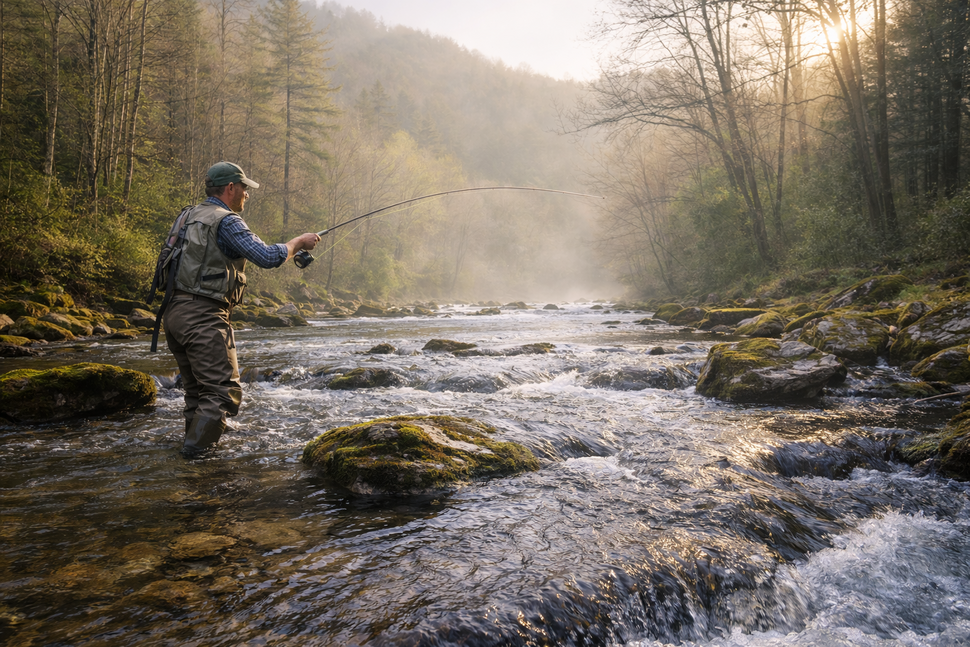
For many anglers, Georgia trout fishing spring conditions feel like a reset button. Winter crowds thin out, water levels often stabilize between rain events, and trout begin feeding more consistently as daylight increases. In North Georgia trout streams, early spring can be a sweet spot: water is still cold enough to keep fish comfortable, but warm afternoons trigger activity—especially in slower runs and tailouts where food drifts predictably.
That said, “spring” in the mountains rarely means steady weather. One week can bring bright afternoons and rising water temps; the next can drop back into near-freezing mornings with snowmelt-like flows. The anglers who do best aren’t just picking the right fly—they’re reading conditions and adjusting pace, depth, and presentation.
Know the Types of Georgia Trout Water
Spring success starts with understanding what kind of water you’re fishing. North Georgia trout streams generally fall into three categories, and each fishes differently early in the season.
Tailwaters
Tailwaters are dam-controlled rivers that tend to run colder and more stable. In spring, that stability can be a huge advantage when freestones are blown out by rain. Early season trout tactics here often revolve around consistent nymphing, midges, and small mayfly activity. Generation schedules and flow changes matter as much as the hatch.
Freestones
Freestones rise and fall with rain. In early spring they can be outstanding when flows are “in shape” (slightly elevated and tinted) and challenging when they’re either too low and clear or high and pushy. On freestones, trout will slide to softer edges when water rises, then spread out into riffles and runs as flows settle.
Delayed Harvest and Stocked Waters
Georgia’s managed and stocked sections can provide fast action in spring, especially after stocking events. Early season strategy here often emphasizes covering water efficiently and matching the mix of natural and pellet-fed behavior you’ll see from newly stocked trout versus fish that have settled in and started feeding naturally.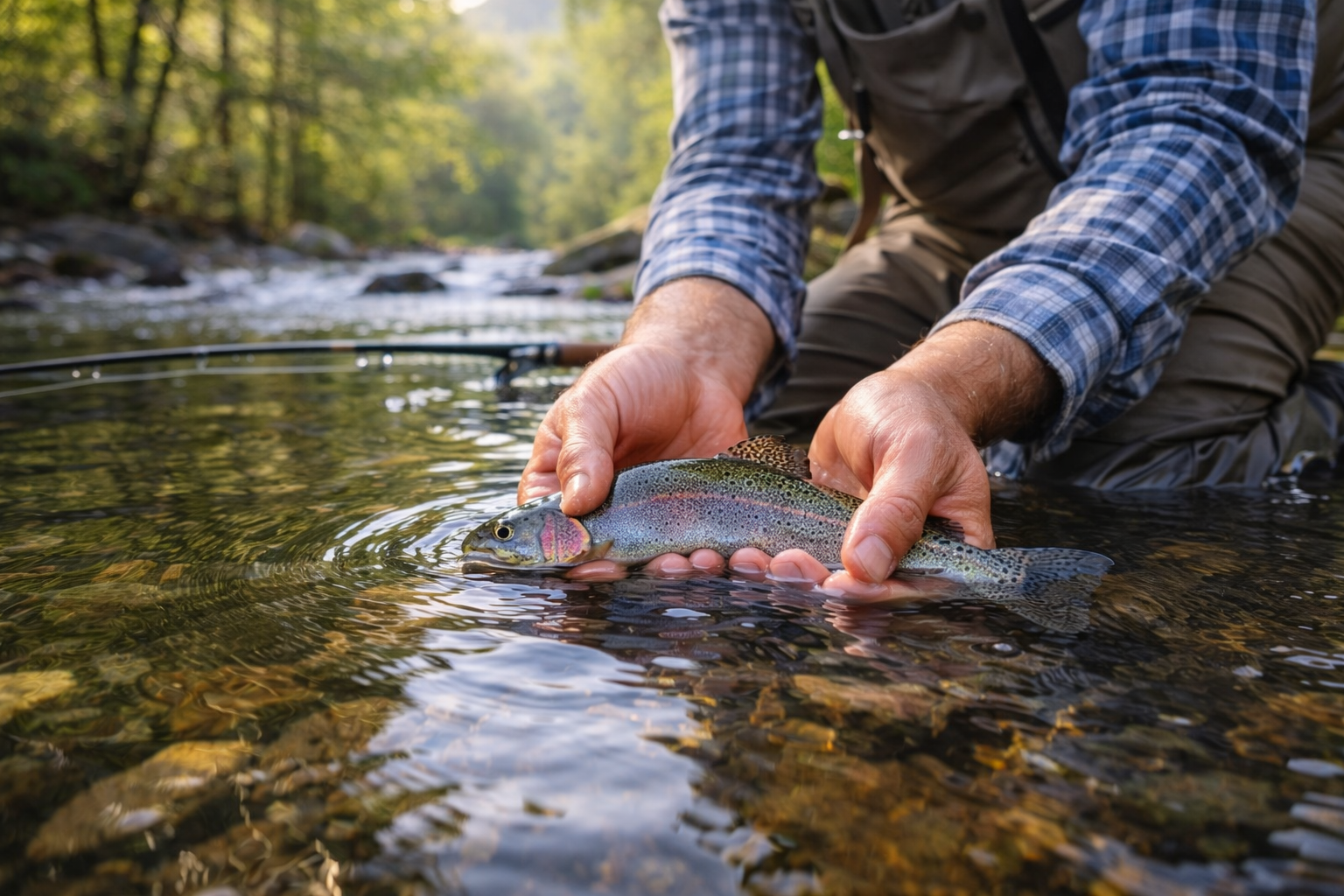
Spring Conditions That Matter Most
You don’t need a full lab report, but a few variables strongly predict how your day will go.
Water temperature
In early spring, water temps commonly sit in the high 30s to mid 40s in the morning and warm several degrees by afternoon. Trout can feed at very cold temps, but the window of more consistent feeding often happens when the water is trending upward. If you can, fish from late morning into afternoon when the water has had time to warm.
Flow and clarity
Slightly stained water is often ideal—it allows you to get closer, fish bigger profiles, and move fish that might be cautious in crystal-clear flows. After heavy rain, focus on the edges: soft seams, inside bends, and protected pockets. When water is low and clear, lengthen leaders, downsize flies, and approach with extra stealth.
Barometric swings and cold fronts
A bright, post-front day can slow things down, especially on pressured fish. Your best move is often to fish slower and deeper, tighten drifts, and target holding water rather than “prospecting” fast.
Early Season Trout Tactics That Produce
Spring trout can be willing, but they still won’t chase far in cold water. The most effective early season trout tactics revolve around getting your fly to the right depth quickly and keeping it there naturally.
1) Nymphing: the spring foundation
If you want the most consistent approach across North Georgia trout streams, it’s hard to beat a two-fly nymph rig. Your goal is contact and control without dragging the flies.
- Where to focus: riffle-to-run transitions, seams along faster water, the heads of pools, and the soft water just off the main current after rain.
- Depth strategy: start deeper than you think, then adjust. In cold water, trout often hug the bottom or sit in slower lanes.
- Weight and drift: change weight before you change flies. If you’re not occasionally ticking bottom, you’re often too shallow.
On most days, a simple system works: a heavier “point” fly to get down, plus a smaller dropper to match the more subtle naturals. If you’re new to nymphing, consider keeping your leader and tippet setup straightforward so you can focus on drift quality and strike detection. For leader options designed for trout, see Freshwater Leaders.
2) Dry-dropper when afternoons warm
As spring progresses, the dry-dropper becomes a high-coverage tool—especially on pocket water and shallow runs. Even when you don’t see rising fish, a buoyant dry can serve as a stealthy indicator while still giving you a chance at surface eats during short hatch windows.
- Best timing: late morning through afternoon, or whenever you notice water temps climbing.
- Where it shines: broken water, pocket water, and the edges of riffles where trout feel secure.
- Dropper depth: start at 12–24 inches below the dry, then deepen if you’re not getting takes.
If you’re fishing dries and dry-droppers regularly, a reliable floating line helps with mends and keeping the presentation clean. Options are available in Floating Fly Lines.
3) Streamers for pre-spawn and opportunistic fish
Streamers can be excellent in early spring, particularly when water is slightly stained or flows are up. Trout don’t have to track the fly as far in those conditions, and bigger meals make sense when calories matter.
- Retrieve style: slow strips with pauses, or swing through likely lanes and add short pulses.
- Target water: bank structure, undercut edges, logjams, and the soft cushion water behind boulders.
- When to switch: if nymphing is producing only small fish, or you’re seeing baitfish activity in tailwaters.
What Trout Eat in Early Spring (and What to Imitate)
You don’t need an exact match every day, but knowing the seasonal food menu helps you choose smarter and fish with confidence.
Midges
Midges are a year-round staple, especially in tailwaters. In early spring, they can be the main event on calm days. Small, sparse patterns fished deep or just off the bottom are often best; emergers can shine when you see subtle surface dimples.
Blue-winged olives (BWOs) and early mayflies
BWOs are common in cool, cloudy conditions. If you get a gray, drizzly day in the mountains, be ready for better-than-expected surface activity. Even when fish aren’t rising, a BWO nymph or emerger can outperform bulkier patterns.
Caddis
As the season moves forward, caddis become more frequent. In early spring, larvae and pupae are often more reliable than adults. Watch for quick, splashy rises later in the day—sometimes trout key on caddis near the surface for short bursts.
Stoneflies and worms
Stonefly nymphs are a dependable “search” option in freestones, and worms can be a high-confidence choice after rain. If flows are up and slightly off-color, a worm imitation along the softer edges can save the day.
How to Read North Georgia Trout Streams in Spring
Spring water conditions shift quickly. These position changes are predictable, and using them makes you more effective than simply changing flies.
When water is high
- Fish the edges and slow seams; avoid wasting time in fast mid-channel currents.
- Look for “current breaks”: behind rocks, inside bends, and soft pockets.
- Increase fly size or add weight to get down fast, but keep drifts short and controlled.
When water is low and clear
- Approach from downstream, stay low, and minimize false casts.
- Lengthen leaders and lighten tippet when needed.
- Fish during low-light windows: early, late, or on overcast days.
When water is warming through the day
- Start deeper in the morning with nymphs.
- As temps rise, shift toward shallower riffles, dry-dropper, or soft-hackles.
- Expect the best feeding to cluster in a few hours rather than all day.
Simple Rig Setups for Spring
If you keep your setups simple, you’ll spend more time fishing effectively and less time re-rigging.
Two-fly nymph rig (general freestone or DH water)
- Leader: 9-foot tapered leader to appropriate tippet
- Indicator: small-to-medium, adjusted for depth and speed
- Flies: heavier nymph plus a smaller dropper
- Weight: add split shot as needed to reach depth quickly
If you’re building or replacing leaders frequently, it helps to start with quality trout leaders that turn over cleanly and knot well. See Freshwater Leaders.
Dry-dropper (pocket water and warming afternoons)
- Dry: buoyant attractor-style dry as a sighter
- Dropper: small nymph 12–24 inches below
- Approach: short drifts through pockets; cover water efficiently
Streamer (stained water or low light)
- Line: floating line with a longer leader, or add a sink tip if you have one
- Targeting: structure and banks; fish methodically
- Cadence: slow strips and pauses; let the fly hang in the seam
Wading and Safety in Spring
Spring is one of the easiest times to underestimate risk. Cold water and sudden flow changes can make a routine crossing dangerous.
- Dress for immersion, not air temp: cold water can sap coordination quickly.
- Use a wading staff in higher flows: it’s not just for balance; it helps you test depth and substrate.
- Avoid unnecessary crossings: fish your bank thoroughly before committing to moving.
- Tailwater awareness: know the generation schedule and how quickly water can rise.
Spring Etiquette and Trout Handling
Early season can concentrate anglers, especially on popular sections of North Georgia trout streams. A little awareness keeps the day enjoyable for everyone and helps protect the resource.
- Give space: if someone is working upstream, don’t drop in directly above them.
- Communicate at access points: a quick “which way are you heading?” prevents leapfrogging.
- Handle fish quickly: keep trout in the water when possible; wet your hands before touching them.
- Barbless or pinched barbs: makes releases faster and reduces handling time.
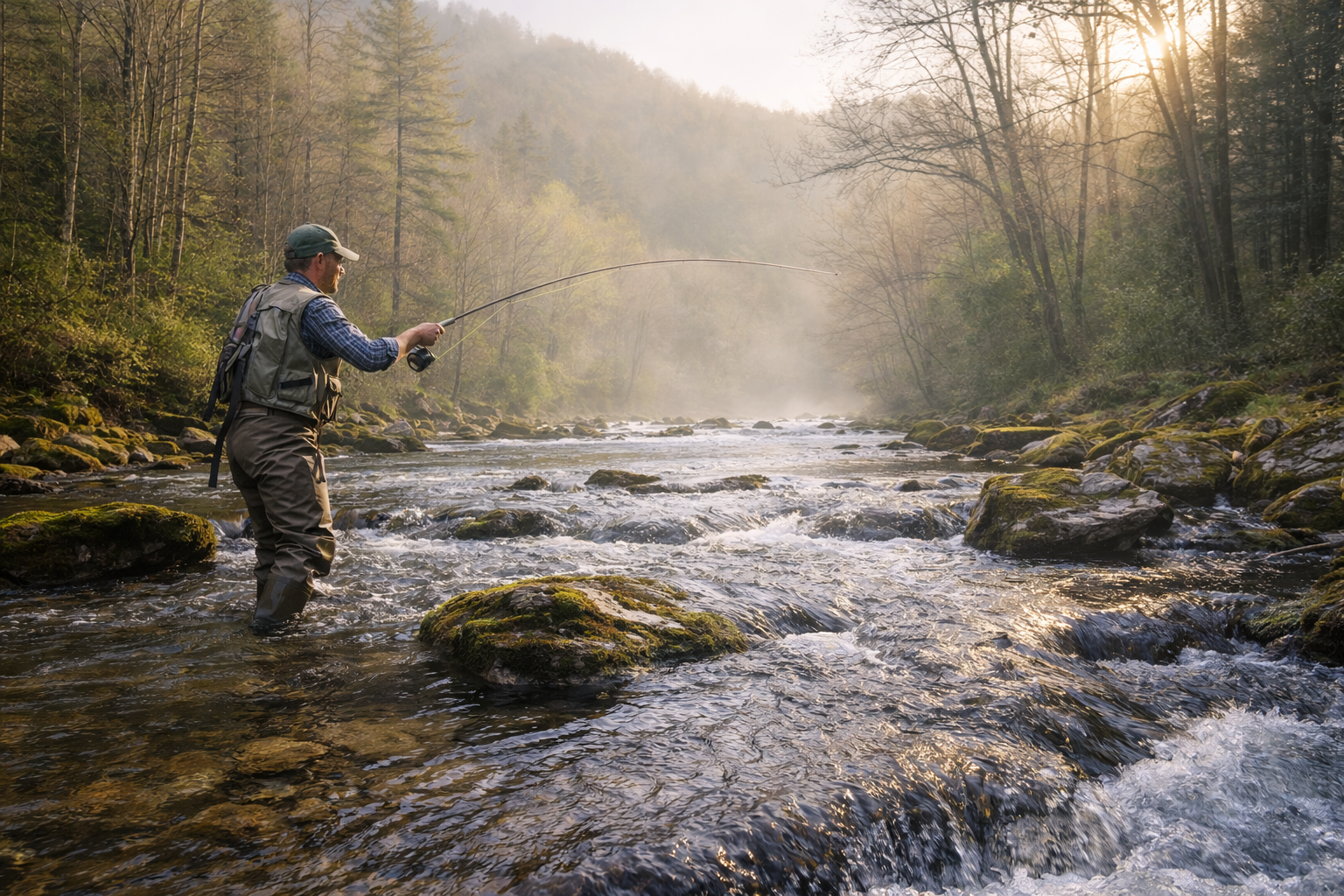
A Practical Spring Game Plan (Put It All Together)
If you want a simple approach you can repeat across Georgia trout fishing spring trips, use this progression:
- Start late morning if nights were cold: let water temps rise a bit before you arrive.
- Nymph first: fish likely holding water with a two-fly rig and adjust weight until you’re in the zone.
- Watch for clues: dimples, drifting shucks, active birds, or fish flashing near the surface.
- Switch to dry-dropper if conditions improve: especially in pocket water or when you see intermittent surface activity.
- Commit to streamers when the water is up or stained: focus on banks and structure, fish slower than you think, and cover water.
Gear Notes That Matter More in Early Spring
You can catch trout with a wide range of setups, but spring tends to highlight a few practical needs: dependable wading traction, a line that mends well on mixed currents, and leaders/tippet that let you downsize without constant break-offs. If you’re refining your trout kit, the Trout collection and General Trout sections are useful starting points for browsing categories like lines, leaders, and core essentials.
Final Thoughts
Spring trout fishing in Georgia rewards anglers who stay flexible. If you focus on water temperature trends, fish the “soft” edges when flows rise, and rely on proven early season trout tactics like deep nymphing, dry-dropper coverage, and well-timed streamers, you’ll be ready for whatever North Georgia trout streams hand you—sun, rain, high water, or that perfect warming afternoon when everything comes together.