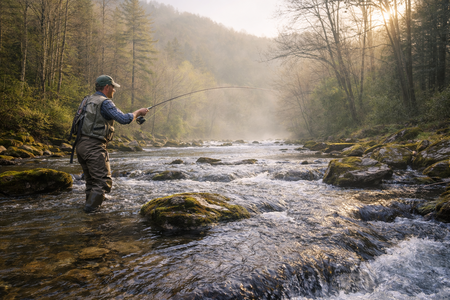
Layering for Spring Fishing: How to Dress for 40°F Mornings and 70°F Afternoons
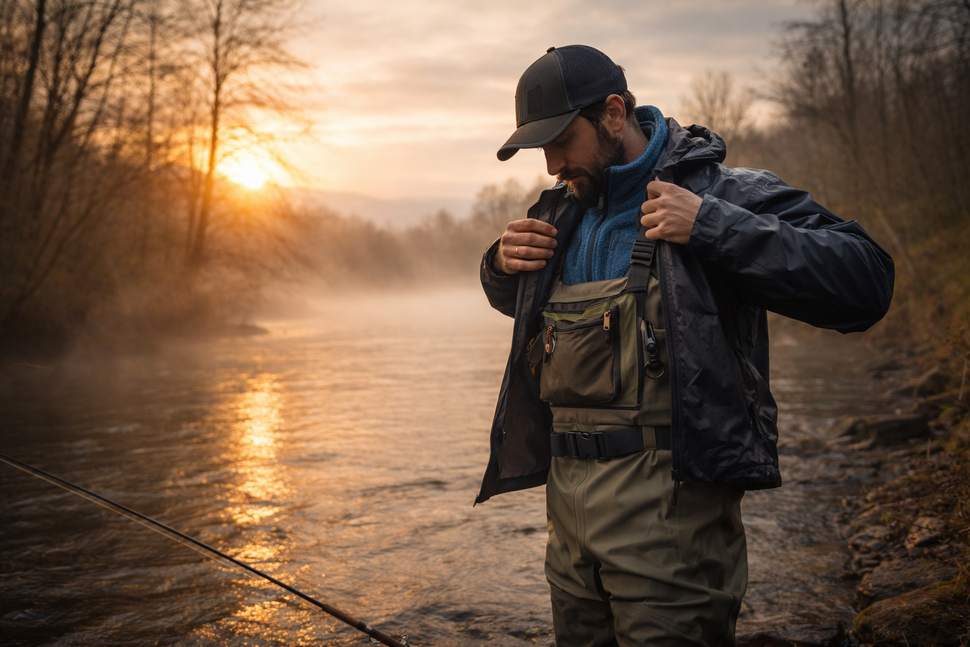
Spring is one of the best times to be on the water—and one of the hardest times to dress for it. A day that starts at 40°F can feel like winter at the launch, then turn into a 70°F, sun-on-your-back afternoon. Add wind, spray, wet hands, and long periods of standing still, and “comfortable” becomes a moving target.
This fishing clothing guide breaks down a simple, proven system for spring fishing apparel that adapts as the weather swings. The goal is straightforward: stay warm without sweating early, then peel layers fast as the day opens up—without ending up damp, chilled, or sunburned.
Why spring fishing feels colder (and hotter) than the thermometer
If you’ve ever checked the forecast and still been surprised, you’re not alone. A few factors make spring conditions on the water feel more extreme than air temperature suggests:
- Cold water: Rivers and lakes warm slower than the air. Standing in a cold current or riding in a boat over cold water can pull heat from your body all morning.
- Wind and evaporative cooling: Light wind plus damp sleeves, wet waders, or sweaty base layers can chill you quickly—especially during long pauses between bites.
- Big swings in sun exposure: A cloudy launch can turn into bright sun by late morning. Dark waders and jackets absorb heat fast once the sun comes out.
- Stop-and-go activity: Hiking to a run, rowing, or wading hard can overheat you, then you cool rapidly when you stop to fish.
The best answer isn’t one “perfect jacket.” It’s a flexible layering system designed for change.
The 3-layer system (plus accessories) that works
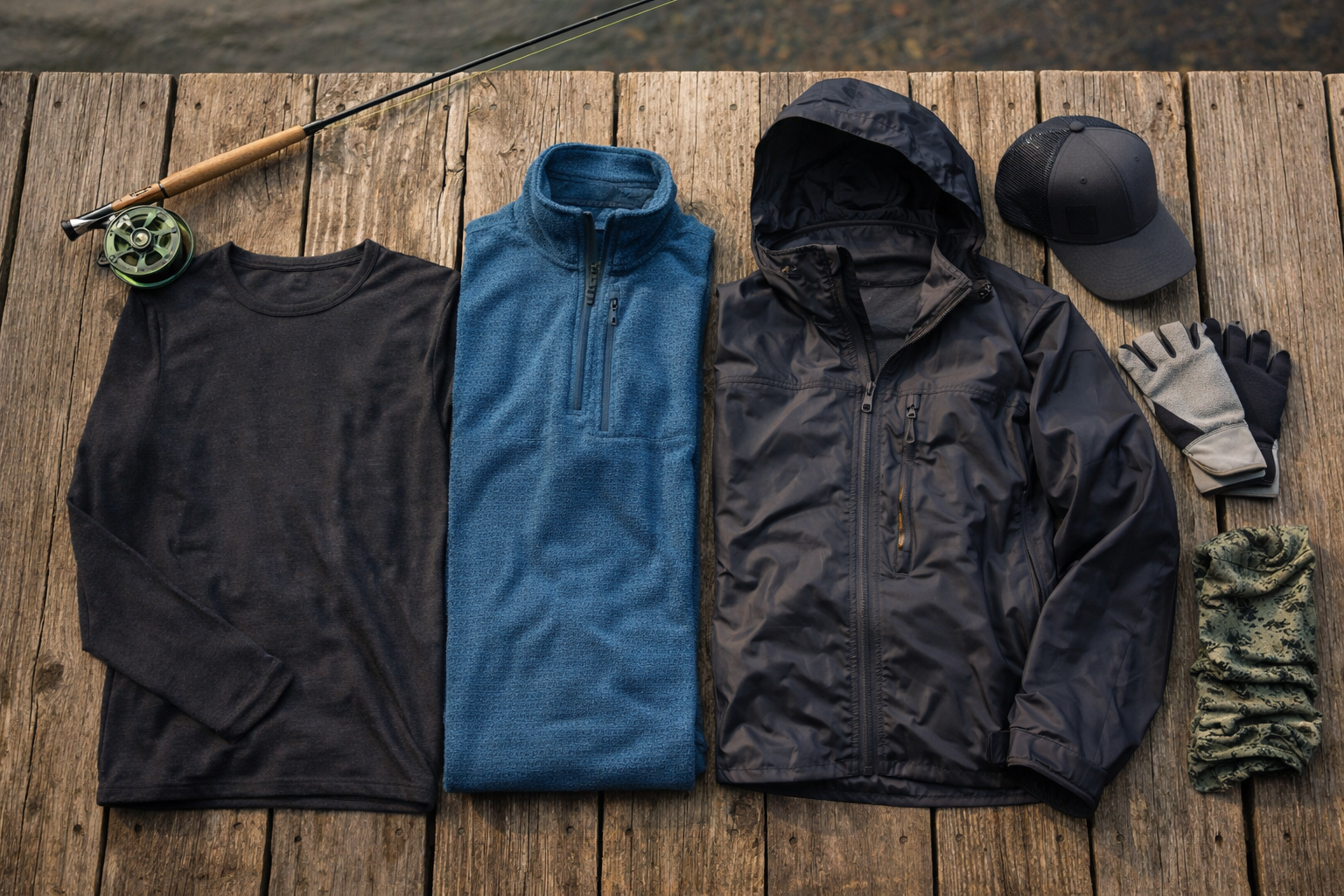
When anglers talk about layering for fly fishing, they’re usually describing a three-part setup: a moisture-wicking base layer, an insulating midlayer, and a protective outer layer. Accessories—hands, head, neck, and feet—often decide whether you’re comfortable.
Layer 1: Base layer (manage moisture first)
Your base layer’s job is to move sweat away from your skin. That matters even at 40°F, because the fastest way to get cold is to start warm, sweat while hiking or wading, and then cool down in a wet shirt.
- Choose: Merino wool or synthetic performance fabric.
- Avoid: Cotton (it holds water and stays cold).
- Fit: Close to skin but not restrictive, so it wicks efficiently.
For a 40°F-to-70°F day, many anglers do best with a lightweight or midweight long-sleeve base top in the morning. If your afternoons consistently reach 70°F and sunny, a lighter base helps you avoid overheating once layers come off.
Layer 2: Midlayer (adjustable warmth)
The midlayer is your temperature dial. It traps warm air and should be easy to vent or remove. In spring, the “right” midlayer changes more than in winter, because you might wear it for two hours and then stuff it into a pack for the rest of the day.
- Good options: Grid fleece, light synthetic insulation, or a technical hoody.
- Look for: A zipper (full or half) for quick venting and easy on/off.
- Durability: If you fish brushy banks, choose a face fabric that won’t pill immediately.
A practical rule: if you can’t comfortably stow your midlayer once the sun hits, it’s probably too bulky for spring. Packability matters.
Layer 3: Outer layer (wind, rain, and spray protection)
Your outer layer stops wind and precipitation from stealing heat. On spring mornings, a “light” breeze can feel sharp, especially in a boat or in open tailwaters. If you’re wet-wading in the afternoon, the outer layer often becomes your wind shell during early hours and a pack item by noon.
- Wind shell or softshell: Great for dry, breezy days; often more breathable.
- Waterproof rain shell: Essential if showers are in the forecast or you’re running a boat in spray.
- Features that matter: Adjustable cuffs, a hood that stays put in wind, and pockets that are usable with a pack or waders.
If you’re building a spring kit, it’s worth having a dependable outer layer you can count on when the forecast is wrong. You can browse options in Fish Hawk’s Outerwear collection.
Putting it together: a 40°F to 70°F spring day checklist
Here’s a simple starting point for spring fishing apparel when you expect a cold launch and a warm finish. Adjust for wind, cloud cover, and whether you run hot or cold.
Morning (around 40°F): start warm, but not sweaty
- Base: Lightweight or midweight long-sleeve (merino or synthetic)
- Mid: Grid fleece or light insulated layer
- Outer: Windproof shell or rain jacket (especially in a boat)
- Bottoms: Wader layering depends on water temp; many anglers use a light thermal bottom under waders at 40°F
- Hands/neck/head: Light gloves, neck gaiter, warm cap
One of the best tricks: start the day slightly cool if you know you’ll hike or row hard right away. If you feel perfectly cozy standing at the truck, you may overheat 15 minutes later.
Midday transition (50s to 60s): vent before you strip
As temperatures rise, venting is faster and keeps you from pulling layers on and off repeatedly.
- Open pit zips or front zip on your outer layer
- Unzip midlayer 4–8 inches to dump heat
- Swap warm hat for a cap if you’re heating up
If you still feel warm after venting, remove one layer. Most anglers remove the outer layer first if it’s not needed for wind or rain; if the wind is steady, keep the shell and stash the midlayer instead.
Afternoon (near 70°F): sun and breathability take over
- Base layer becomes your shirt: A breathable long-sleeve is often ideal for sun and bugs.
- Keep a shell accessible: Spring storms can build quickly, and the ride back can be chilly.
- Protect exposed skin: Neck, ears, and backs of hands are common burn zones.
If you wet-wade in the afternoon, the temperature can feel even warmer—but remember that shadows, wind, and cold water can still cool you fast. Keep at least one insulating piece within reach.
Waders and wet-wading: how layering changes
Your lower-body strategy depends heavily on whether you’re in waders all day or switching to wet-wading as the afternoon warms.
If you’re in waders all day
- Focus on moisture management: Waders don’t breathe as well during heavy exertion. A good base layer bottom helps prevent clammy legs.
- Use light-to-medium insulation: Overdoing it leads to sweat, which then cools you later.
- Mind your feet: Cold feet end days early. Use appropriate wading socks (not cotton) and don’t cram too thick a sock into a tight boot.
If you plan to wet-wade later
- Pack for the morning: You still need warmth at 40°F, which often means waders early.
- Have a clean transition plan: Bring a small towel and a dry pair of socks for the changeover.
- Keep wind protection: Wet legs plus breeze can cool you surprisingly fast.
Accessories that matter more than you think
When conditions swing, small pieces often give the biggest comfort boost per ounce in your pack.
Headwear: temperature control in seconds
Swapping a beanie for a cap is one of the fastest ways to regulate warmth. A brim also helps with glare and spotting fish.
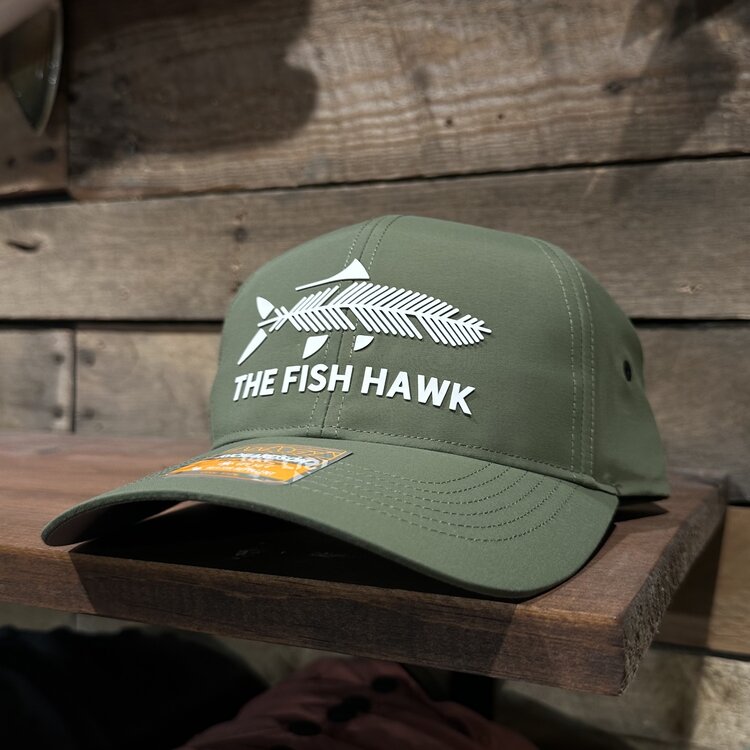
Options live in Fish Hawk’s Headwear collection.
Neck gaiters and gloves: warmth early, sun protection later
A neck gaiter is a spring staple: it blocks wind at dawn, then becomes sun protection when the day heats up. Gloves are similar—lightweight pairs take the edge off cold mornings and protect hands from wind and line burn.
See Fish Hawk’s Neck Gaiters/Gloves collection for options.
Sunglasses and sunscreen
Not strictly “layers,” but essential. Spring sun reflecting off water can be intense even when air temps are cool. Polarized sunglasses reduce eye strain and help you read water; sunscreen prevents burns that sneak up on overcast mornings and bright afternoons.
Common layering mistakes (and how to avoid them)
- Wearing cotton underneath: If you remember one thing from this fishing clothing guide, make it this. Cotton gets wet and stays wet.
- Overinsulating early: Sweat now equals chill later. Start slightly cool and warm up with movement.
- Ignoring wind: A calm 40°F feels manageable; a windy 40°F can feel brutal. Pack a wind-stopping outer layer.
- Bringing layers you can’t stow: If it won’t fit in your sling/pack, you’ll end up tying it around your waist or leaving it behind.
- Forgetting hands and feet: Your core can be fine while fingers go numb. Lightweight gloves and proper socks are small but decisive.
Brand notes: building a reliable spring kit
Different anglers prefer different fits and fabrics, but consistency matters: your layers should work together without binding your shoulders or restricting casting. Many spring-ready pieces are designed with fishing-specific mobility, pocket placement, and fabrics that handle repeated wet/dry cycles.
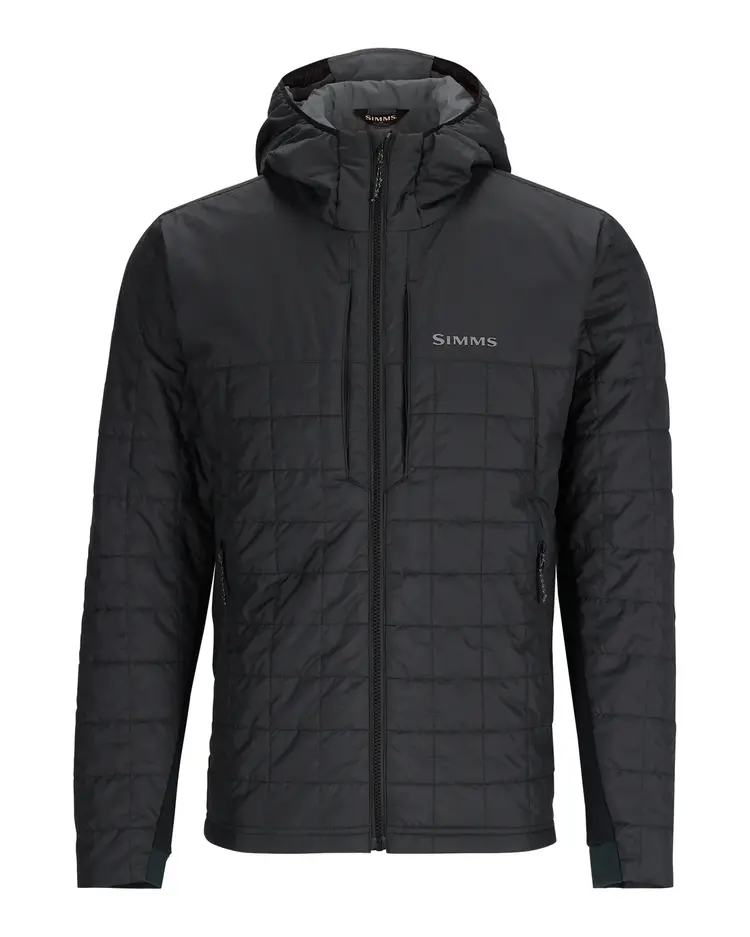
- Simms clothing includes technical layers and outerwear built for wading and boat days.
- Patagonia clothing offers versatile baselayers, fleeces, and shells that pack well and layer cleanly.
A simple decision tree for spring mornings
If you want a quick way to decide what to wear when you’re looking at a 40°F launch and a 70°F finish, use this:
- Is it windy or are you in a boat? Bring a windproof outer layer (even if it’s sunny).
- Is rain possible? Bring a waterproof shell with a good hood.
- Will you hike/row hard first thing? Choose a lighter midlayer and plan to vent.
- Will you be standing still (nymphing, indicator, stillwater)? Add a touch more insulation because inactivity cools you down.
- Will the afternoon be bright? Favor breathable long sleeves and neck coverage for sun.
Final thoughts: dress for the water, not the forecast
Spring fishing rewards the anglers who stay comfortable long enough to fish well. A smart layering system—base for moisture, mid for warmth, outer for wind and rain—lets you handle cold starts without paying for it at noon. Add a couple of key accessories, and you’ll spend less time thinking about temperature and more time focused on the next cast.
Use this approach to dial in your own spring fishing apparel over a few outings. Once you know which layers you actually wear and which ones stay in the pack, your system gets lighter, simpler, and more reliable—exactly what you want when the day swings from 40°F mornings to 70°F afternoons.
Recent articles
View all
5 Essential Fly Patterns for Spring Trout in the Southeast